
Pay Attention to Resume Layouts
... And Get Powerful Results
No Matter What Resume Formats You Use!

Use the correct rules from ResumeEdge.com about resume layouts that give you a resume that POPS.

In previous sections of this site, we've talked about resume formats, resume content, resume design, resume fonts, resume wording, and job-specific resumes. On this page, we're going to look at the various resume layouts you can use, such as:
- Traditional, one-column resume layout
- Two-column resume layout
- Left-aligned resume layout
- Centered resume layout
- Indented resume layout

But before we get into individual types of layouts, it's important to note that resume layout also includes your use of white space and graphical elements.
Most experts recommend that you keep your resume to one page, but this can be difficult if you've been in the career force for more than a few years.
So, don't sweat it; go to 2 pages if you must. But just keep in mind that you need to be as clear and concise as you possibly can be.
All resume layouts should have equal margins on all 4 sides... 1 inch to 1.25 inches is good. Using lines, shaded boxes and small graphics such as arrows can work well, if used in moderation.
Look through some of our resume templates to get a feel for how graphics can be used successfully. Of course, you must know your market too. For example, a creative, graphic-enhanced resume may go over much better for a web designer than it will for a loan officer at a bank. Use wise judgment.
Now let's take a look at the various resume layouts and what sets them apart from each other...
Traditional, One-column Resume Layout
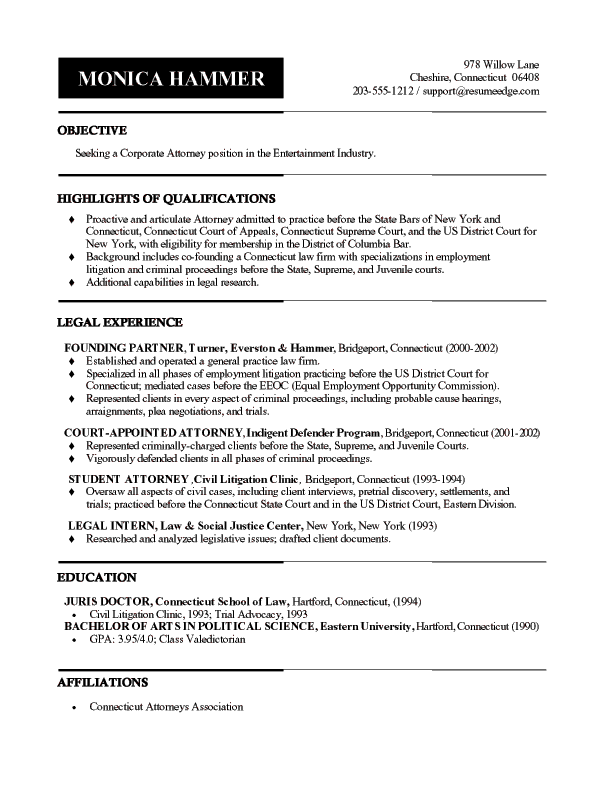
With this layout, your objective or skills summary, job history, and education are listed one after the other down the page, in blocks. All lines are left-justified.
Two-column Resume Layouts
This layout gets a bit more creative and consists of headings in the far left column, such as Skills, Employment History, etc., and the corresponding bullets or paragraphs in the right column.

Left-aligned Resume Layouts
With this layout, all of your headings and corresponding bullets are left-aligned underneath each other. This can give a nice, clean look to a short resume, especially.

Centered Resume Layout
Although centered text can be hard to read, with the right use of formatting and other layout features, this layout can create an elegant resume for certain purposes.
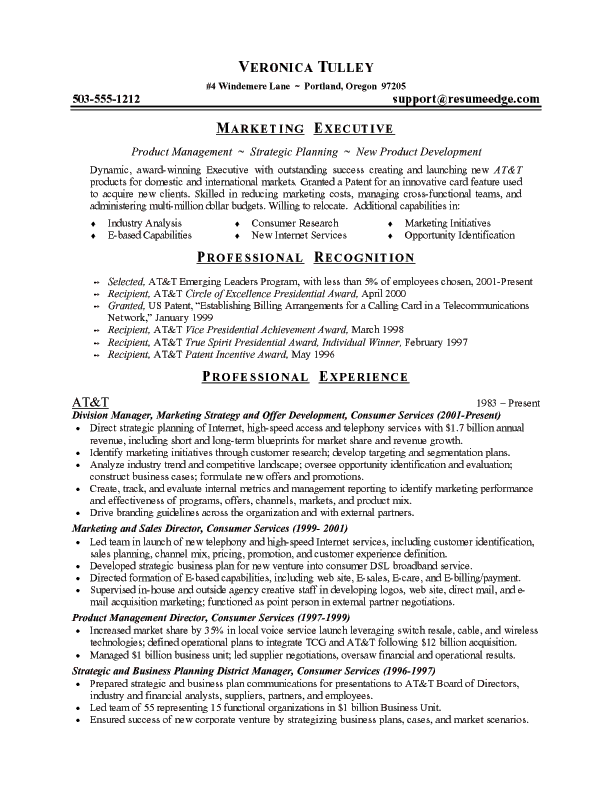

Much of your decision in which resume layouts to consider will be personal. With different fonts and spacing, it is possible to create an endless number of variations. For best results, try 2 or 3 different layouts with your information and see which one "feels" the best. It never hurts to get a second—or third—or fourth opinion, either!
Confused? Don't be. I have an answer for you... If you don't want to have to worry about choosing a resume layout, then I highly recommend you check out this online resume builder website, where you'll find an easy-to-use interface that enables you to create and submit your resume and a cover letter. There's a super cool free trial too.
Learn More About Writing a Resume
- Start here to learn how to create a resume
- Get tips for effective resume writing
- Learn about the different resume formats you can use
- Use the right resume fonts, for maximum impact
- Should you use resume objectives or a power statement?
- Why specific resume wording matters

If you have resume questions, Ask the Expert has answers...
Search This Site:
Welcome


Writing a Resume
 Getting Started
 Writing Tips
 Choose Format
 Objectives... or NOT
 Resume Layouts
 The Right Fonts
 Wording Tips
 Format Questions?
Resume Examples
 Power of Example
 Free Examples
 Chrono. Examples
 Functional Samples
 Combo Format
 Student Resumes
 Entry Level Samples
 Prof. Samples
- Executive Resumes
 By Job Types
Resume Templates
 Start Here
 Outline
 Chronological Format
 Functional Format
 Hybrid Format
 CV Templates
 MS Word Templates
Online Resumes


Cover Letter Advice
 Start Here
 What Is a Cover Ltr
 Cover Letter Do's
 Cover Letter Don'ts
 Step-by-Step
 What Format to Use
 Letter Templates
- Great Examples
 More Letter Tips
 Follow Up Letters
 Cover Ltr Questions?
Job Interview Tips


Find a Job


Career Change
 Start With a Plan
 Career Change
 Freelancing
 Start a Home Biz
- My Dream Career
- Work at Home Ideas
- Home Business Training
Get Help
 Peer Review
 Emp. Gap Questions
 Wk History Questions
 Employer Questions
 Education Questions
- Format Questions
- Cover Ltr Questions
 Interview Questions
- Career Change Questions
- Losing a Job
 Misc. Questions
Just for Fun


More Help
Site Sponsors
See our Advertising Policy
Advertise on this Site

Job Seekers'
Power Pack!

Grab your copy of these 5 concise reports about every aspect of the job hunt. Don't miss this opportunity to change your life for the better!


FREE Tips & Advice
Sign up to our newsletter, PSRF Career Connection and get free gifts!


